Focus and Scope
Focus
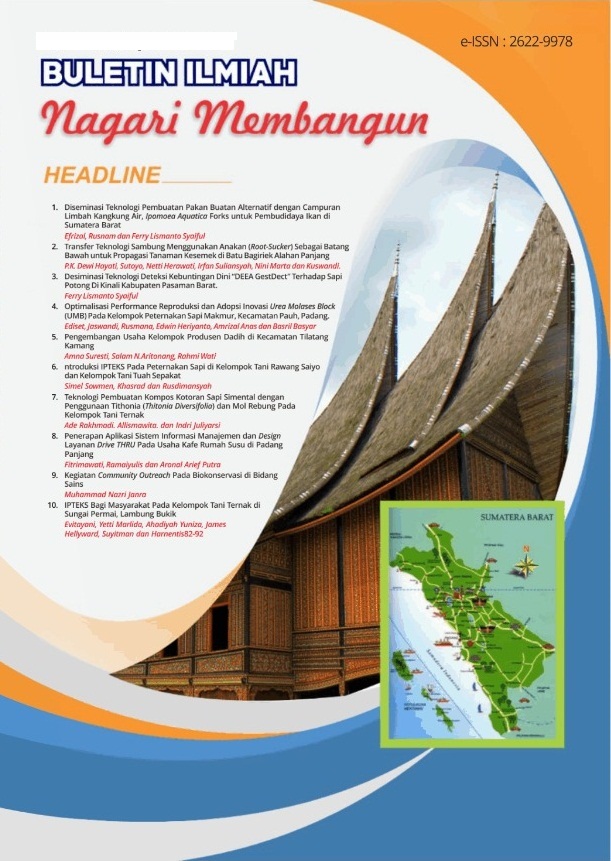
Buletin Ilmiah Nagari Membangun focuses on the advancement of knowledge, innovation, and scholarly practice in community empowerment and community-engaged scholarship. The journal provides an academic forum for disseminating conceptual perspectives, research findings, innovative practices, and evidence-based approaches that strengthen communities and address social, economic, educational, environmental, institutional, and other development-related challenges.
The journal emphasizes scholarship that connects academic knowledge with community needs and encourages meaningful collaboration among researchers, practitioners, policymakers, educators, students, community organizations, and other stakeholders. It particularly welcomes contributions that demonstrate how research, innovation, and academic engagement can generate practical solutions, strengthen local capacities, improve community well-being, and contribute to sustainable development.
Buletin Ilmiah Nagari Membangun also encourages critical examination of emerging issues, trends, challenges, opportunities, and innovative models in community empowerment. The journal seeks contributions that advance both scholarly understanding and practical implementation while promoting participatory, inclusive, evidence-based, and community-responsive approaches.
Scope
Buletin Ilmiah Nagari Membangun publishes original scholarly contributions related to community empowerment and community-engaged research and practice. The journal welcomes interdisciplinary and multidisciplinary manuscripts covering, but not limited to, the following areas:
-
Community empowerment, including strategies, models, innovations, and interventions designed to strengthen community capacity, participation, resilience, independence, and well-being.
-
Public service, particularly scholarly approaches to improving the quality, accessibility, effectiveness, and social impact of services delivered to communities.
-
Outreach, including academic and institutional initiatives that extend knowledge, expertise, technology, and resources to communities.
-
Community engagement, with emphasis on collaborative relationships between academic institutions and communities in identifying needs, developing solutions, implementing programs, and evaluating outcomes.
-
Extension, including the dissemination and application of scientific knowledge, technology, innovation, and professional expertise to support community development.
-
Engaged research, particularly research conducted through meaningful interaction and collaboration between researchers and community stakeholders.
-
Community-based research, including studies designed around community priorities, local contexts, and practical challenges.
-
Community-based participatory research, emphasizing equitable participation of community members throughout the research process, from problem identification and study design to implementation, interpretation, and dissemination.
-
Action research, particularly research that integrates systematic inquiry with practical action to address community problems and improve programs, practices, or social conditions.
-
Public scholarship, including scholarly work that connects academic expertise with public issues and contributes to broader societal understanding and development.
-
Service-learning, particularly educational approaches that integrate academic learning with structured community service and reflective practice.
-
Community service, including evidence-based programs, interventions, technologies, and innovative practices implemented to address community needs and strengthen local development.
-
Impact studies, including assessments of the effectiveness, outcomes, sustainability, and broader social effects of community empowerment, engagement, outreach, extension, and service initiatives.
-
Innovation in community development, including the adaptation, implementation, and evaluation of technologies, methods, models, products, and locally appropriate solutions that respond to community needs.
-
Emerging issues and challenges in community empowerment, including critical analyses of current developments, opportunities, barriers, and transformations affecting communities and community-based initiatives.
The journal welcomes empirical studies, applied research, action-oriented research, community-based studies, interdisciplinary research, conceptual analyses, and scholarly evaluations of community programs and interventions that demonstrate clear academic relevance and contribute to the advancement of community empowerment knowledge and practice.
Priority is given to manuscripts that demonstrate originality, methodological rigor, substantive engagement with relevant scholarship, clear relevance to community needs, and a meaningful contribution to both academic discourse and practical community development.